Fengtian Economics
In 1928, Zhang Zuolin, a former bandit turned warlord, controlled Manchuria, commanded 300,000 troops, and negotiated with the Japanese as an equal.
The Paradox
What he didn’t have:
- No formal education
- No democratic mandate
- No legal authority over the territory he governed
What he did have:
- Nearly two decades of sustained power
- Control of one of Asia’s most resource-rich, strategically contested regions
His secret wasn’t military dominance. It was incentive alignment.
The Core Insight
The Fengtian clique operated less like a traditional government and more like a decentralized syndicate. The mechanisms he used reveal something fundamental about how power actually works when formal authority doesn’t exist.
Authority ≠ power. This is the lesson.
The Bandit Who Became a State
Zhang Zuolin started as a common criminal, leading a bandit gang in rural Liaoning in the 1890s.
The Key Insight
He understood something most outlaws didn’t: legitimacy is cheaper than violence.
The Rise:
- 1902: Appointed local militia commander (offered services to Qing dynasty instead of fighting)
- 1916: Military governor of Fengtian province
- 1926: Controlled Beijing itself
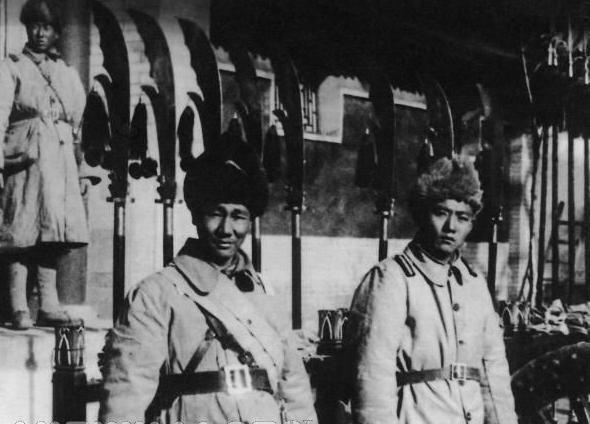
How did a bandit with no formal training, no aristocratic lineage, and no ideological movement build a coalition powerful enough to challenge the Republic of China?
The Strategy
He didn’t try to own everything. He gave everyone a piece.
The Structure of the Fengtian Clique
The Fengtian clique wasn’t a hierarchy—it was a coalition of independent operators bound by mutual interest.
Zhang’s Inner Circle
Five Key Players
- Wu Junsheng — Governor of Heilongjiang, controlled the northern railways
- Tang Yulin — Governor of Rehe, secured the Mongolian frontier
- Zhang Xueliang — Zhang’s son, commanded the air force and modernized units
- Yang Yuting — Chief of staff, managed Japanese relations and arms procurement
- Japanese Kwantung Army officers — Provided loans, weapons, and intelligence in exchange for economic concessions
None of these actors worked for Zhang in the traditional sense. They were allies with aligned incentives.
Why Autonomy Worked
Wu Junsheng controlled railways → Zhang couldn’t micromanage logistics across Manchuria’s vast territory
Tang Yulin held Rehe → He had the local tribal relationships Zhang didn’t
Yang Yuting handled Japanese negotiations → Zhang needed plausible deniability
Each actor had autonomy in their domain. But they all benefited from the collective’s strength.
The Incentive Structure
- Rival warlord invades → Wu’s railways threatened
- Japanese loans dry up → Yang’s modernization projects stalled
- Zhang falls → Everyone loses their positions
The coalition persisted not because Zhang could enforce compliance, but because defection was expensive.
The Economics of Warlord Loyalty
Zhang’s core mechanism was resource distribution, not command-and-control.
1. Revenue Sharing
Manchuria’s wealth came from:
- Railway tariffs (controlled by Wu Junsheng)
- Opium trade (regulated but taxed heavily)
- Salt monopolies (distributed among governors)
- Japanese loans (secured through Yang Yuting)
- Agricultural taxes (collected locally, split with the center)
Zhang’s Distribution Strategy
- Let governors keep 60-70% of local taxes
- Took a cut of transit fees through his territory
- Controlled the disbursement of Japanese loans (making him the gatekeeper for modernization funds)
Why Governors Stayed
Governors could get rich in their provinces. But they needed Zhang to:
- Protect them from rival warlords
- Secure external financing
- Arbitrate disputes with other coalition members
The Core Value
Zhang’s value wasn’t in hoarding resources—it was in being the most credible coordinator.
2. Reputation as Currency
Zhang rarely issued direct orders. Instead, he used soft power:
Three Mechanisms
- Signaled support → Attending banquets, sending gifts, arranging marriages
- Withdrew favor → Excluding someone from meetings, cutting off loan access
- Publicized loyalty → Through newspapers he funded
Example: Yang Yuting’s Weapons Deals
When Yang negotiated weapons purchases from Japan, he did so on Zhang’s behalf. If the deal succeeded, Yang’s reputation rose, but so did Zhang’s, because Yang was “his man.”
The Cost of Defection
If Yang defected, he’d lose:
- Access to Japanese contacts (who trusted him because he represented Zhang)
- His position in the coalition (making him a target for rivals)
- His reputation (being labeled as disloyal in a world where trust was scarce)
Zhang’s power wasn’t coercive—it was gravitational. Staying in his orbit was more valuable than leaving.
3. Strategic Marriages
Zhang’s family didn’t just rule—they connected.
The Network:
- Zhang Xueliang (his son) married Yu Fengzhi, daughter of a wealthy merchant family
- Zhang’s daughters married into Japanese-aligned Manchurian aristocracy
- His sons-in-law were given governorships or military commands
This wasn’t romantic—it was collateral.
The Social Cost of Betrayal
If a governor considered defecting, he had to weigh:
- Would his daughter be disowned?
- Would his grandchildren lose their inheritance?
- Would his in-laws turn against him?
Marriage ties made betrayal socially expensive, not just politically risky.
Why This Structure Works
Success Conditions
- Resources are distributed, not concentrated — No single actor can monopolize wealth/power
- Defection is costly — Leaving the coalition means losing access, reputation, or relationships
- The coordinator adds value — The leader isn’t just extracting rents; they’re providing infrastructure, arbitration, or network effects
- Trust is scarce — In high-uncertainty environments, coordination itself is valuable
Failure Modes
- The coordinator becomes extractive — If Zhang had tried to take 90% of provincial revenues, governors would’ve defected
- External shocks realign incentives — The Japanese invasion in 1931 made local interests irrelevant; nationalism trumped economic ties
- A rival offers a better deal — If another warlord credibly promised better terms, the coalition would fracture
The Meta-Lesson
Zhang Zuolin never had formal authority over Manchuria. He wasn’t elected, wasn’t appointed by Beijing, and wasn’t even the wealthiest member of his own coalition.
But he had structural power: the ability to coordinate actors who couldn’t coordinate themselves.
This Pattern Appears Everywhere
Power exists without formal authority in:
- Decentralized organizations where influence flows through reputation, not hierarchy
- Coalitions where participants retain autonomy but benefit from collective strength
- Networks where the coordinator’s value is in connection, not control
Authority is what you can demand. Power is what people willingly give you because the alternative is worse.
Postscript: How Zhang Fell
The Assassination
In 1928, Zhang Zuolin was assassinated by Japanese officers who had grown frustrated with his increasing independence. His train was blown up as he returned to Manchuria from Beijing.
The irony: The same structure that gave him power—decentralization, coalition-building, reliance on external financing—made him vulnerable once his partners decided he was more valuable dead than alive.
The Collapse
1928: Zhang Xueliang inherited the coalition
1931: Japanese invaded outright, and the Fengtian clique dissolved
- Local governors defected
- Revenue streams dried up
- The coalition that had lasted two decades collapsed in months
The Final Lesson
Coordination-based power is flexible and resilient, until it isn’t. The moment your partners have a better option, the structure evaporates.
Zhang Zuolin understood incentives. But he didn’t control them.
And in the end, neither does anyone else.
If you found this interesting, I’m exploring more intersections of history, economics, and systems design. Let’s talk: jameshan.cs@gmail.com
Comments
Loading comments...