Я могу говорить
Most people who can’t say what they mean have nothing wrong with their voice.
They have PhDs. They have vocabularies that could pin any feeling to the wall like a dried moth. They can describe, with extraordinary clarity, the exact shape of the distance between themselves and someone they love. They can name it, weigh it, trace its origin to a specific year, a specific silence, a specific room. And describing it changes nothing. They can talk about it for hours and not once cross it. Precision is not the same as contact.
There is footage of a boy being cured of his stutter in thirty seconds.
A woman in a lab coat takes his hands. He can barely say his own name. She builds tension in them deliberately, locks them in place. One, two, three. Your hands don’t move. He’s frozen and she did it on purpose, she made a prison out of his fists so she could open them. Then she lets go of everything at once.
А сейчас я сниму это состояние, и ты сможешь говорить, только громко и четко, свободно и легко.
She tells him to say it.
Я могу говорить.
He does. No stutter. No hesitation. Whatever the obstruction was, it lived somewhere below the throat, in whatever part of you decides before you open your mouth whether you’re allowed.
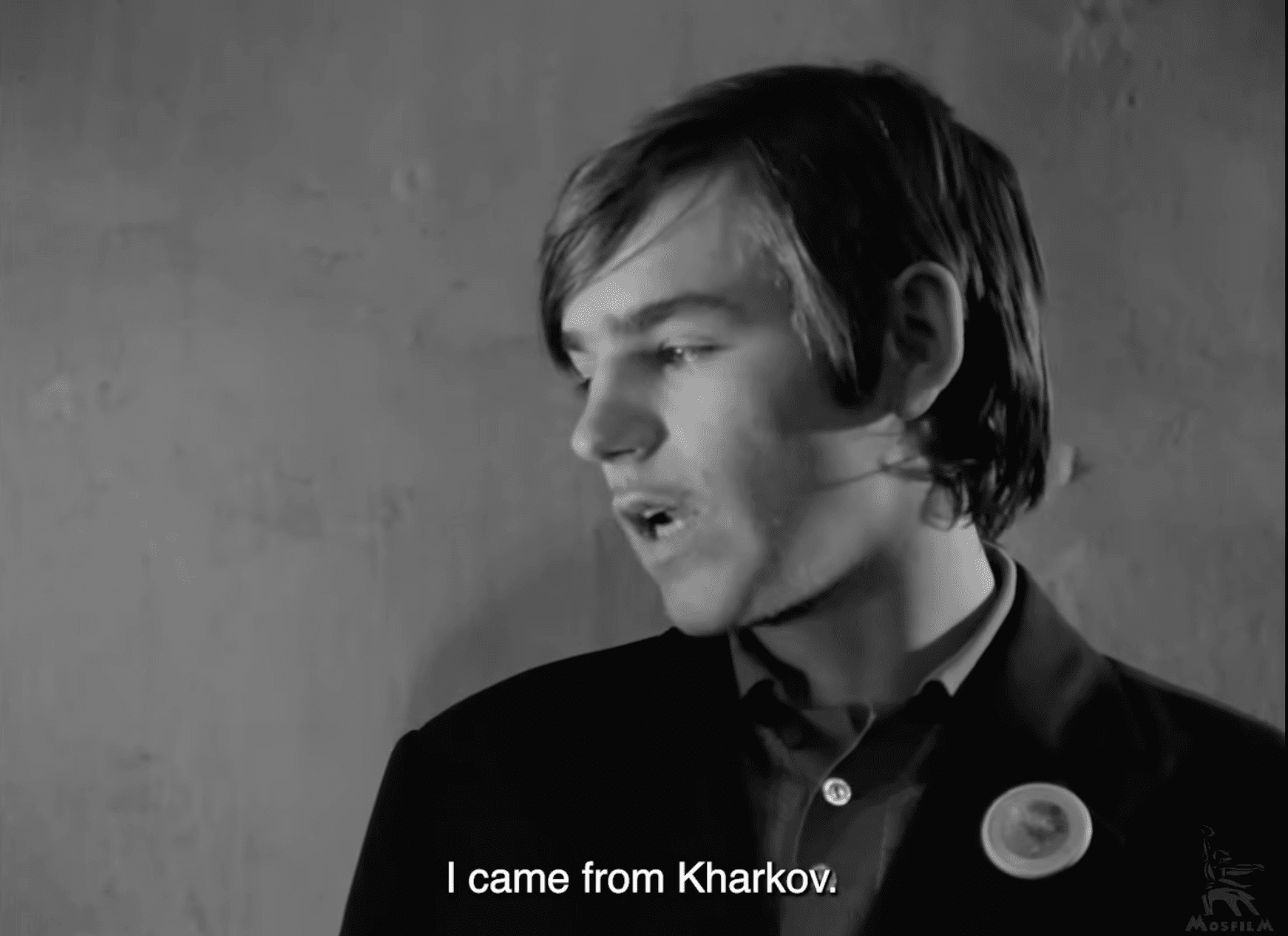
The method is real. It’s called emotional stress psychotherapy, developed by a Soviet doctor named Kazimir Dubrovsky, who found that a stutterer’s block could be broken in a single session if you bypassed the belief that held it in place.1 The boy’s name is Yuri Zhary. Tarkovsky filmed this for the opening of Mirror, recreating Dubrovsky’s method on camera. The stutter is real. The cure is real. None of this is metaphor.
He carried this for years. It shaped how he entered every room, how he flinched before every introduction, how he learned to let silences swallow the things he wanted to say rather than fight his own mouth to say them. It was the central fact of his life. And it was nothing. It was tension held so long it had hardened into identity, and then it dissolved in the time it takes to count to three. And the boy’s face afterward: he looks like someone who just set down something so heavy he’d forgotten he was carrying it. Like the weight had become part of his skeleton and now he doesn’t trust his own balance.
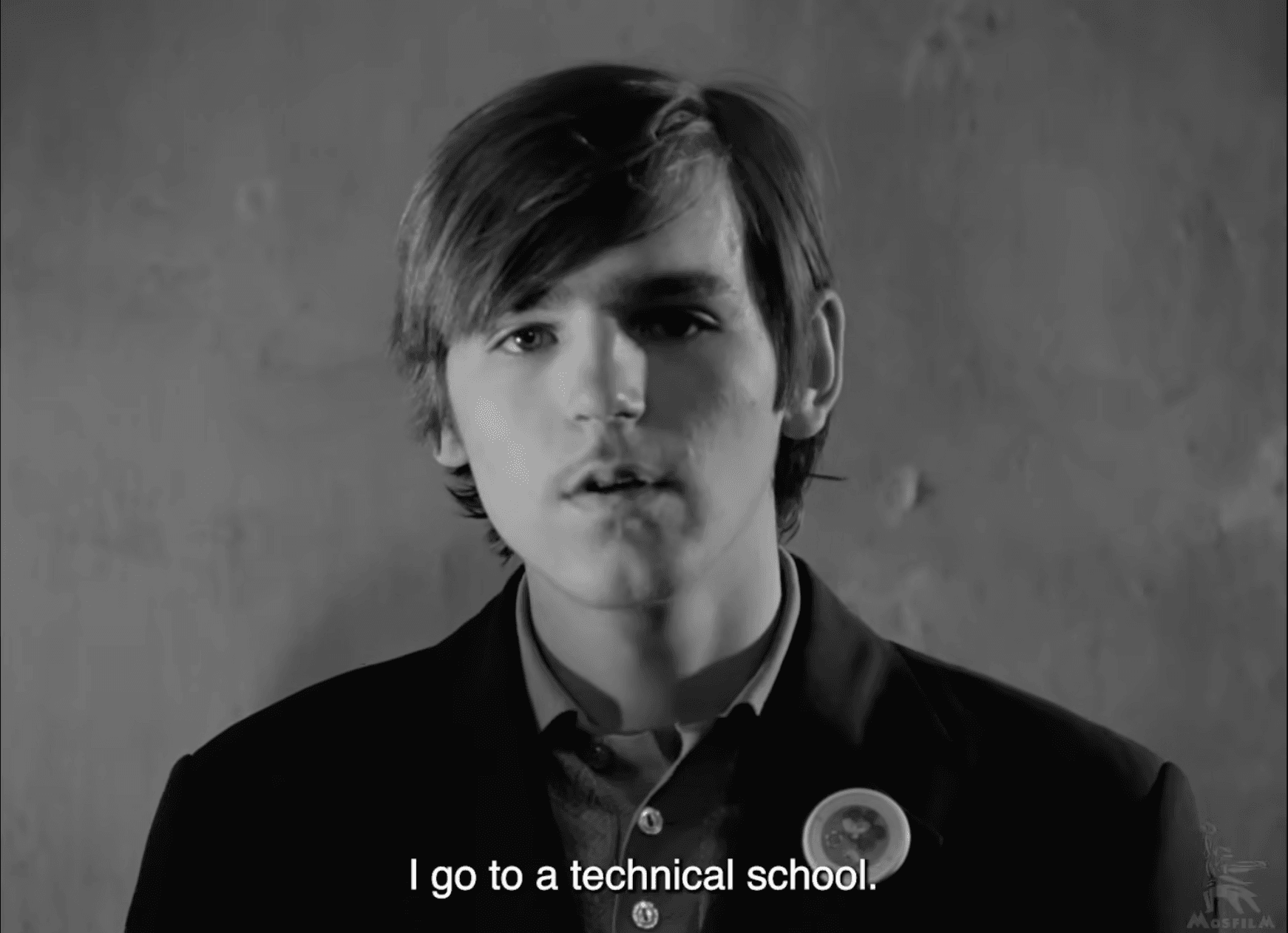
The years don’t come back. That’s the part no one talks about. Everyone wants this to be a story about hope and it is, but it’s also a story about waste. Every classroom where he couldn’t answer. Every thought that was whole and clear inside him that died somewhere between his brain and his teeth. Every time he knew exactly what to say and the knowing meant nothing because his body had decided before he walked into the room that he couldn’t. All of that. For nothing. The door was never locked. Or maybe it was, and what she gave him was thirty seconds of not caring, maybe the stutter is in the brain, in the wiring, in the genes, and what dissolved wasn’t the problem but the fear of it, but it doesn’t matter, watch his face, he was just pressing against the door wrong and no one told him, and no one put their hands on his and counted to three, and so he suffered, for years, from something that could be broken in half a minute by someone who believed it could be broken.
That’s not a miracle. I keep watching the footage and what I feel isn’t wonder, it’s something closer to fury. That it was this small. That something this small could hold him for this long.
Говорить is imperfective. It’s the verb of ongoing, continuous capacity. Not “I can say this sentence” (that would be сказать, perfective, bounded, a single completed act), but “I am someone who speaks.”2 The same verb you use when you say я говорю по-русски, I speak Russian. The verb of fluency, of belonging to a language. The boy isn’t performing a recovered skill. He’s declaring a change in what he is. Or what he was all along. Something like that. The grammar knows before he does.
But the boy got cured. That’s the thing. Someone took his hands and counted to three and he walked out different. The people I’m talking about never get that. No one takes their hands. No one counts to three. Because there’s nothing visibly wrong. They’re fluent. They’re articulate. They perform competence in every room they enter. And somewhere underneath, the same frozen hands. The same tension that no one names because it doesn’t look like tension, it looks like poise.
Some part of them decided, long before they can remember, that they couldn’t. Couldn’t ask, couldn’t need, couldn’t say the thing that. And that decision sank so deep it stopped being a decision and became the body itself. It lives in the jaw. In the chest. In that half-breath before you say something honest where you hold still and talk yourself out of it, where you rehearse the sentence and then swallow it, where you. It lives there.
You can learn every technique. You can read the books and build the systems and become someone who is very, very good at managing the distance. And you can mistake managing it for not having it, you can be so articulate about your own silence that you fool yourself into thinking articulation was the point. You can describe the distance so well that people think you’ve crossed it. You haven’t. You’ve just given the cage an interior decorator.
Tarkovsky put this at the opening of Mirror. It had to come first. It had to be the promise the rest of the film spends two hours failing to keep.3
Because the film is two hours of people who speak beautifully and can’t reach each other. A son calls his mother. You never see his face. His voice is calm and clear and he asks her something ordinary and she answers, and the whole conversation is a skin over the conversation underneath, and neither of them peels it. They’re not fighting. They’re not estranged. They’ve just. Two people who have given up on saying the real thing. He could say it. She could say it. The words exist. The line is open. Neither of them speaks.
The narrator understands his own life better than anyone in the film. He sees the exact shape of what went wrong with his mother, his wife, his children. He sees it with total clarity. And he carries it, with eloquence, with intelligence, with complete awareness, all the way to the end. No one takes his hands. No one counts to three. No one tells him the thing stopping him isn’t real, because by now maybe it is. Maybe you hold tension long enough and it calcifies. Maybe that’s what bone was in the first place.
Свободно и легко. Freely and easily. That’s what the woman told the boy right before she released him. Two words that describe almost nothing in the rest of life. Two words that sound like a country you’ve heard of but can’t find on any map.
The boy got thirty seconds of someone’s full attention and it changed what he was. Most people never get that. Most people carry it carefully, gracefully, all the way down. Which maybe means most people are stuttering all the time, fluently, in ways that sound like speech.
Footnotes
-
Dubrovsky’s method, developed in the 1960s at a Kharkov clinic, relied on what he called “one-session emotional stress therapy.” The core premise: stuttering persists partly because the patient believes it will. The theatrical staging (the counting, the held hands, the authoritative release command) was deliberate, almost liturgical, as if he’d studied more faith healers than he’d admit in a Soviet medical journal. It worked often enough to be remarkable and inconsistently enough to remain controversial, which is the résumé of every interesting idea in psychology. See Nekrasova, Yu. B., “The Psychotherapeutic Method of K. M. Dubrovsky in Speech Therapy,” Voprosy Psikhologii, 1968. ↩
-
The imperfective/perfective distinction in Russian is one of those grammatical features that encodes an entire philosophy of action. Сказать (perfective) treats speech as a completed, bounded event: you said it, it’s done. Говорить (imperfective) treats speech as a state, a capacity, an ongoing condition. The boy doesn’t say “I can say something.” He says “I can speak,” present tense, habitual, unbounded. It’s the kind of distinction that makes you suspect grammar was invented by someone who had been hurt by the wrong tense. For a fuller treatment: Forsyth, J., A Grammar of Aspect: Usage and Meaning in the Russian Verb (Cambridge UP, 1970). ↩
-
Tarkovsky nearly cut the scene. It was filmed separately from the rest of Mirror, and he debated whether documentary footage belonged at the opening of what is otherwise a lyric, associative film. He kept it because, as he wrote in Sculpting in Time, the scene established something the rest of the film could not: a cure that actually works. ↩