Sarnia to Barrie
April 22, 2026
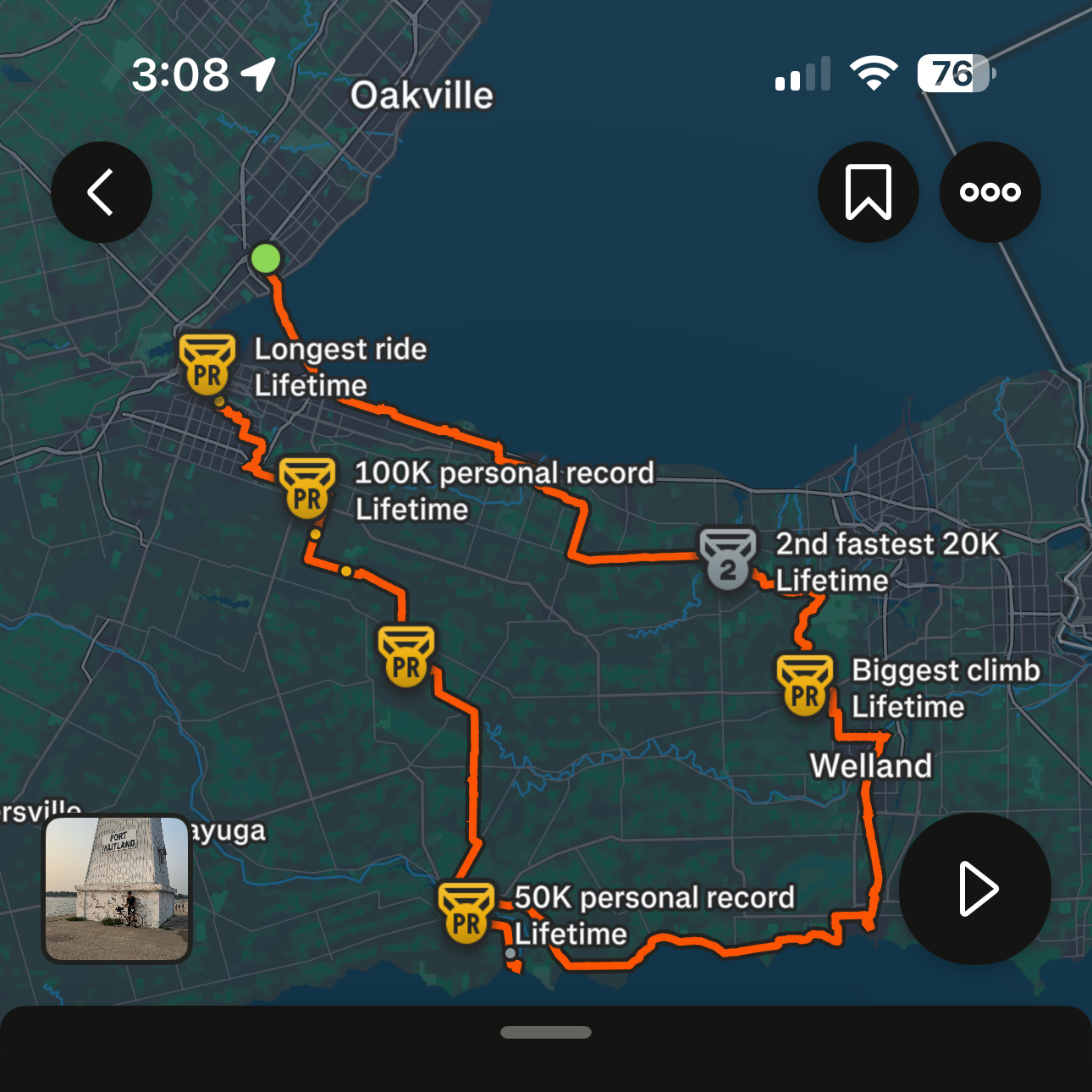 Niagara loop, August 2025
Last summer I rode Burlington down the Welland Canal to Port Colborne, out to Port Maitland, touched the lighthouse, rode back to Hamilton. 220 km on a commuter bike, fuelled by a pan pizza and gas station snacks. I was not training for anything.
The thing I remember is the feeling at the end. Not exhaustion. Closer to recalibration. The tank was bigger than I’d assumed, and I had no good model for why, other than years of swimming and running had quietly built something I’d never measured.
I kept thinking: I could have kept going.
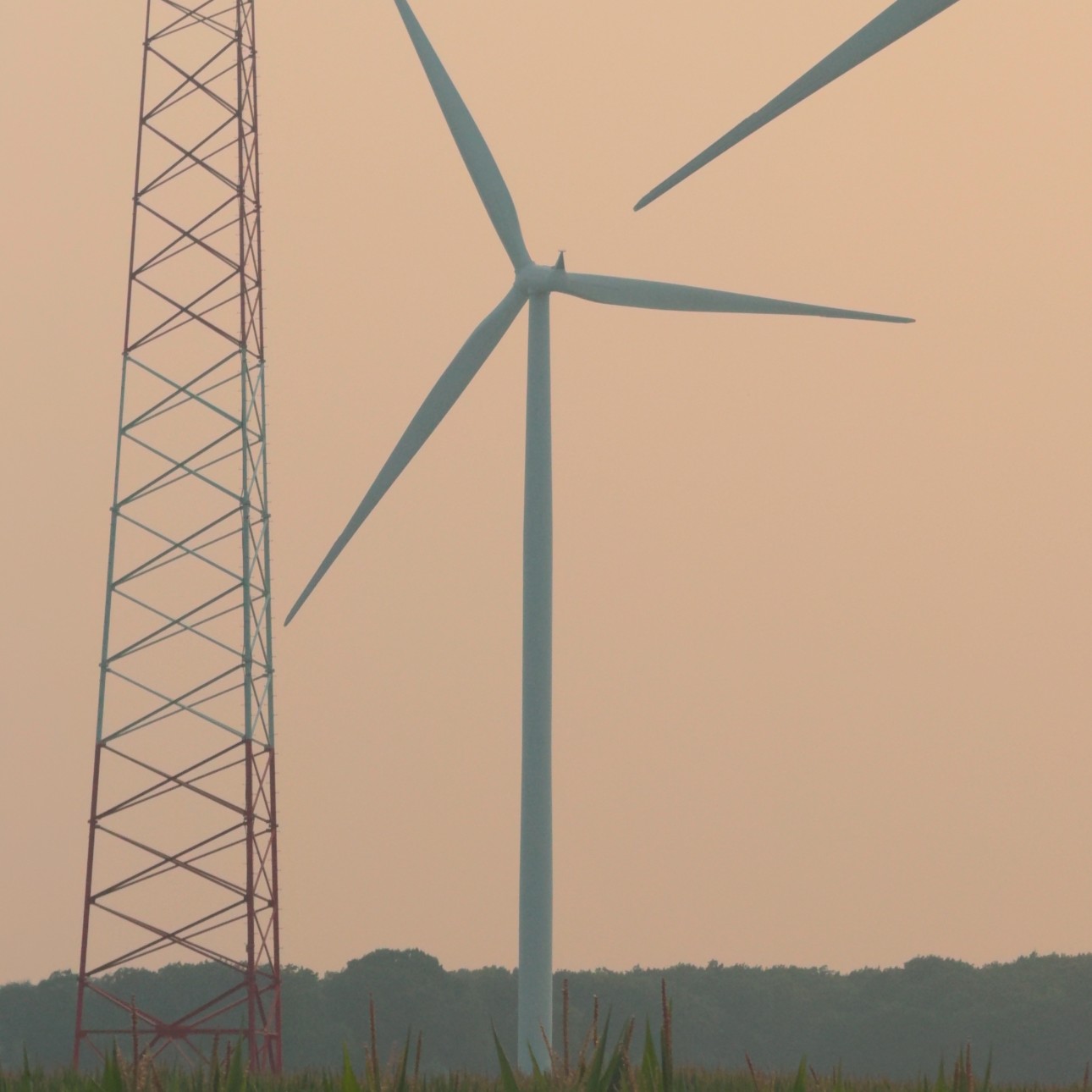 Lake Erie, August 2025
So now I’m planning to take a train to Sarnia, clip in at 11pm, and ride 460 km up the Lake Huron coast to Barrie without sleeping.
The route follows the lake the whole way. Sarnia, Grand Bend, Goderich, Kincardine, Southampton. Flat and coastal and dark for the first six hours because I’m starting at night. Then the escarpment up toward Owen Sound, which is where the road starts to feel like something instead of a line on a phone. Then rail trail into Barrie, car-free and flat, which is good because by then the decisions need to be cheap.
I want to be honest about what this is. It isn’t an athletic feat at the pointy end of the sport. People who ride randonneuring brevets do longer distances on tighter time cutoffs every season. The reason I want to do it is selfish. I want to know what hour eighteen feels like. I want to find out whether the thing I learned at Port Maitland generalizes, or whether it was a one-off the body got lucky on.
What I like about ultra-distance cycling, said as someone who isn’t really a cyclist, is that it’s hard to fake. There’s no tactic that gets you out of hour fourteen. You either built the thing or you didn’t, and then you go find out.
Running hurts more per hour but it ends faster. Swimrun is chaos and cold water and constant decisions. A long ride is different. Low-grade and continuous, held at 28 km/h with the lake on one side and the dark on the other. You decide, periodically, to keep deciding to stay on the bike.
The sun comes up somewhere around Goderich, hour six or seven. That’s the moment I’m planning around. Everything before is just getting through the night. Everything after is riding along Georgian Bay on a Saturday morning, which is a fine thing to do with a Saturday morning regardless of how you got there.
The date isn’t set. The plan is, which is most of it. I showed up to the lighthouse. I’ll show up to Sarnia.
1
*April 22, 2026*
2
3

4
*<i>Niagara loop</i>, August 2025*
5
6
Last summer I rode Burlington down the Welland Canal to Port Colborne, out to Port Maitland, touched the lighthouse, rode back to Hamilton. 220 km on a commuter bike, fuelled by a pan pizza and gas station snacks. I was not training for anything.
7
8
The thing I remember is the feeling at the end. Not exhaustion. Closer to recalibration. The tank was bigger than I'd assumed, and I had no good model for why, other than years of swimming and running had quietly built something I'd never measured.
9
10
I kept thinking: I could have kept going.
11
12
---
13
14

15
*<i>Lake Erie</i>, August 2025*
16
17
So now I'm planning to take a train to Sarnia, clip in at 11pm, and ride 460 km up the Lake Huron coast to Barrie without sleeping.
18
19
The route follows the lake the whole way. Sarnia, Grand Bend, Goderich, Kincardine, Southampton. Flat and coastal and dark for the first six hours because I'm starting at night. Then the escarpment up toward Owen Sound, which is where the road starts to feel like something instead of a line on a phone. Then rail trail into Barrie, car-free and flat, which is good because by then the decisions need to be cheap.
20
21
I want to be honest about what this is. It isn't an athletic feat at the pointy end of the sport. People who ride randonneuring brevets do longer distances on tighter time cutoffs every season. The reason I want to do it is selfish. I want to know what hour eighteen feels like. I want to find out whether the thing I learned at Port Maitland generalizes, or whether it was a one-off the body got lucky on.
22
23
---
24
25
What I like about ultra-distance cycling, said as someone who isn't really a cyclist, is that it's hard to fake. There's no tactic that gets you out of hour fourteen. You either built the thing or you didn't, and then you go find out.
26
27
Running hurts more per hour but it ends faster. Swimrun is chaos and cold water and constant decisions. A long ride is different. Low-grade and continuous, held at 28 km/h with the lake on one side and the dark on the other. You decide, periodically, to keep deciding to stay on the bike.
28
29
The sun comes up somewhere around Goderich, hour six or seven. That's the moment I'm planning around. Everything before is just getting through the night. Everything after is riding along Georgian Bay on a Saturday morning, which is a fine thing to do with a Saturday morning regardless of how you got there.
30
31
The date isn't set. The plan is, which is most of it. I showed up to the lighthouse. I'll show up to Sarnia.