Andrei Rublev and the Problem of Creation Under Uncertainty
What does it mean to make art in an absurd and cruel world?
This question has followed me for a while. Whether anything I make matters. Whether the act of creation is naive, or arrogant, or just beside the point when set against everything else. The film doesn’t answer it directly. It shows you someone living inside it for three hours, and by the end, something has shifted.
Fifteenth-century Rus’ is not a nation. It’s a collection of principalities still bleeding from Mongol conquest, ruled by princes who spend as much time fighting each other as any external threat. Tatar raids are routine. Villages burn and are rebuilt and burn again. The church is the only institution that persists across borders, the only thing resembling continuity, and even it is fractured by schism and politics.
In the film’s first sequence, a man builds a crude hot air balloon from animal skins, rises above his village, glimpses the world from above, and crashes to his death. No one remembers him. This is the texture of life here: brief, brutal, observed by icons that stare down from church walls with flat gold eyes.
That man saw something no one else had seen. Then he died, and it didn’t matter. The world continued exactly as before.
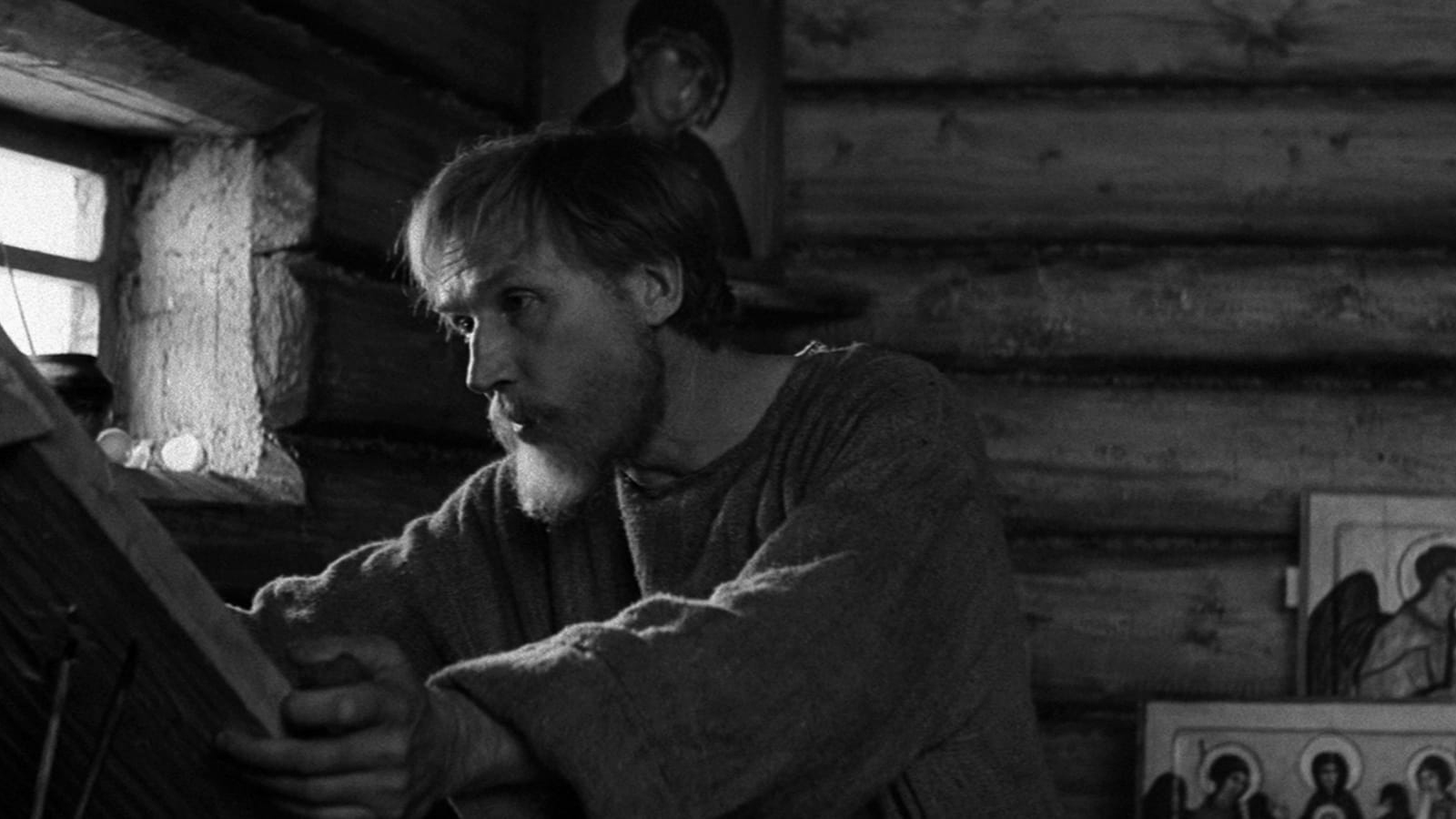
Andrei Rublev is a monk and icon painter. Tarkovsky follows him for two and a half hours as he moves through this landscape: taking commissions, debating theology with other monks, witnessing. A pagan festival in the woods. A jester arrested for mocking the boyars. Italian craftsmen hired to decorate a cathedral. The world presses in on him, and the question sharpens: why paint transcendence when existence is this?
Then comes the raid.
Tatars and a treasonous Russian prince sack a cathedral city. The sequence is difficult to watch. The camera doesn’t look away: from the violence, from a horse falling down stairs, from a woman’s assault. Andrei kills a man to save someone. Afterward, he stops speaking. He stops painting. He takes a vow of silence that lasts years.
His silence is not dramatic. It’s logical. He has seen what humans do to each other. The icons he painted depicted a world of grace and order. The world he witnessed was mud and screaming and fire. Any response feels inadequate. So he stops responding.
The impulse to go quiet makes sense. To stop making things because making things feels like a lie, or a distraction, or an insult to what’s actually happening. What’s the point of beauty when everything is burning? What’s the point of form when the world is formless?
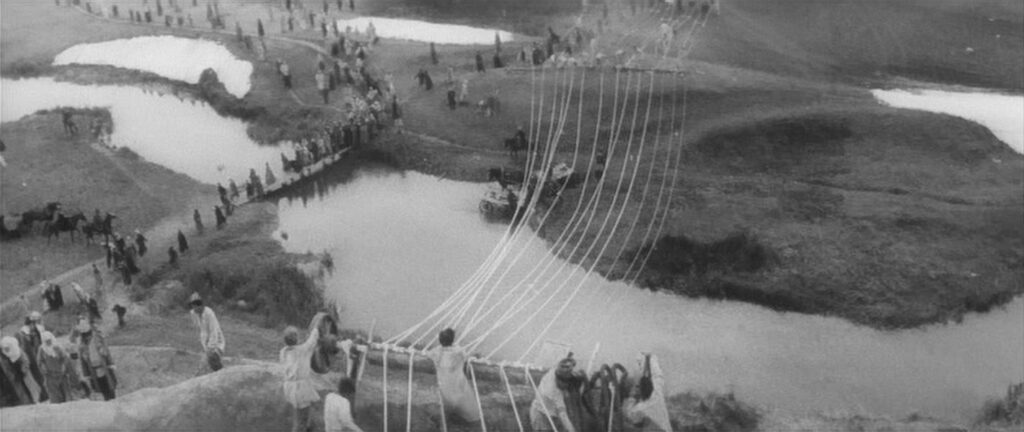
Years pass. A boy named Boriska claims he knows the secret to casting bells. His father, a master bell-maker, has just died, taking the craft with him, the boy insists, except for what was passed down. The Grand Prince needs a bell. The boy gets the commission.
He doesn’t know anything.
For forty minutes of screen time, we watch him bluff. He orders men around, rejects casting sites, demands specific clay from a riverbank. The workers doubt him. He doubles down. When the furnaces are built wrong, he rages. The whole time you’re watching a teenager improvise his way through a process that could get him killed if it fails.
The bell is cast. The mold is broken open. Everyone waits.
It rings.
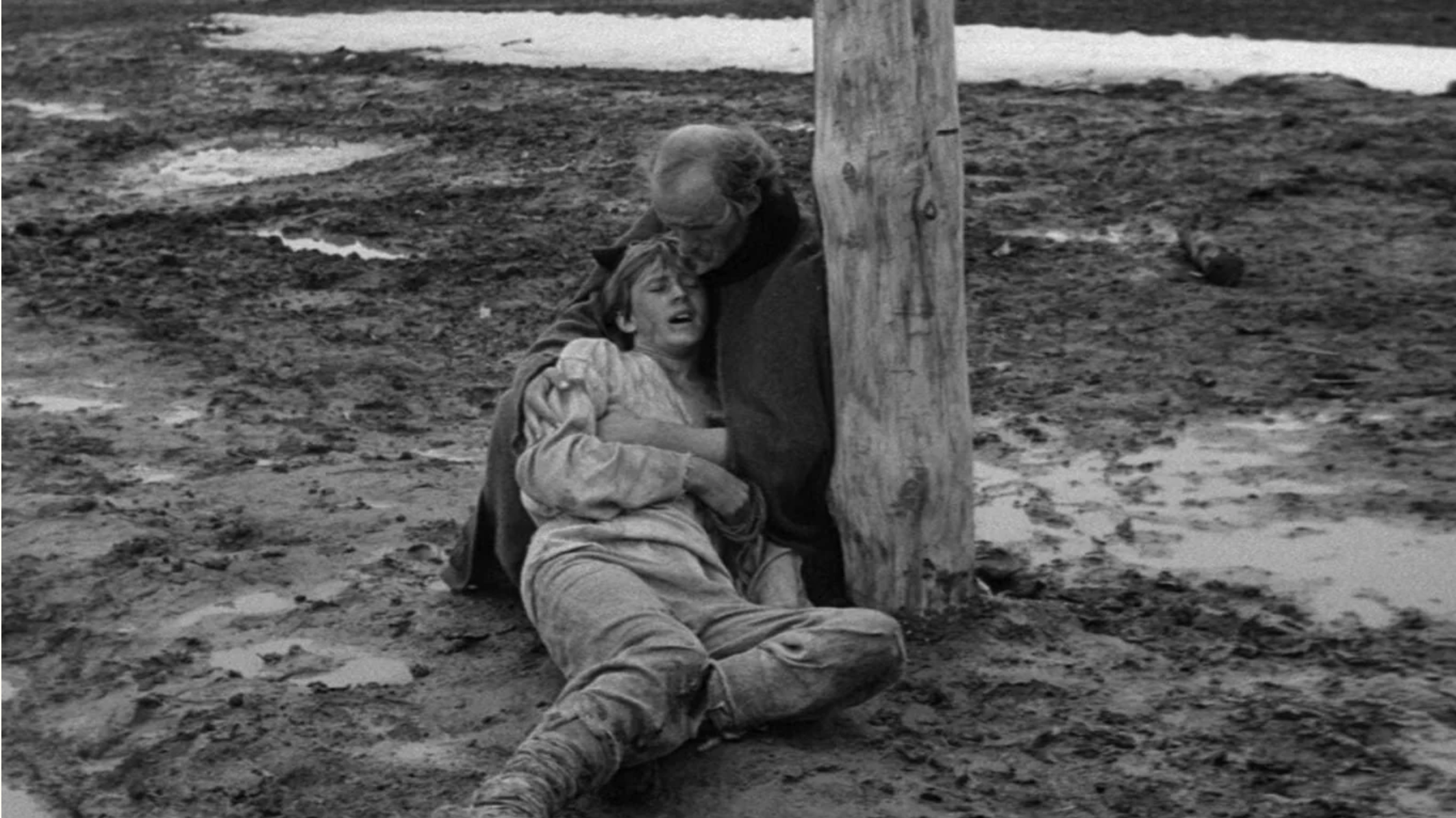
The boy collapses in the mud, sobbing, and confesses to Andrei: his father never told him anything.
This is the part that stays with me.
Boriska had no inheritance, no technique, no guarantee. He had a commission he lied his way into and the threat of death if he failed. What he had was the willingness to act anyway: to dig clay, to build furnaces, to stand in front of men twice his age and insist he knew what he was doing when he didn’t.
The bell works not because Boriska had secret knowledge, and not because God intervened. It works because he did something. Creation happened in the mud, under threat, without certainty.
All the times I’ve waited. Waited to know enough. Waited to feel ready. Waited for the conditions to be right, for the chaos to settle, for things to make sense first. The bell doesn’t care about any of that. It rings or it doesn’t. You find out after.
Andrei watches the boy collapse and weep and confess his fraud, and something breaks open in him. He speaks for the first time in years. He decides to paint again.
The bell doesn’t undo the raid. The icons Andrei will paint won’t resurrect the dead. But the act of making, of imposing form on chaos, of ringing out across a ruined landscape, is itself the point. Meaning isn’t something you find before you begin. It emerges from beginning.
The film ends in color. For two and a half hours, we’ve watched a brown and grey world: mud, smoke, rain, blood. Then Tarkovsky cuts to Rublev’s actual icons, and the screen explodes. Gold leaf, deep blues, the famous Trinity. The camera moves slowly across paint that has survived six hundred years.
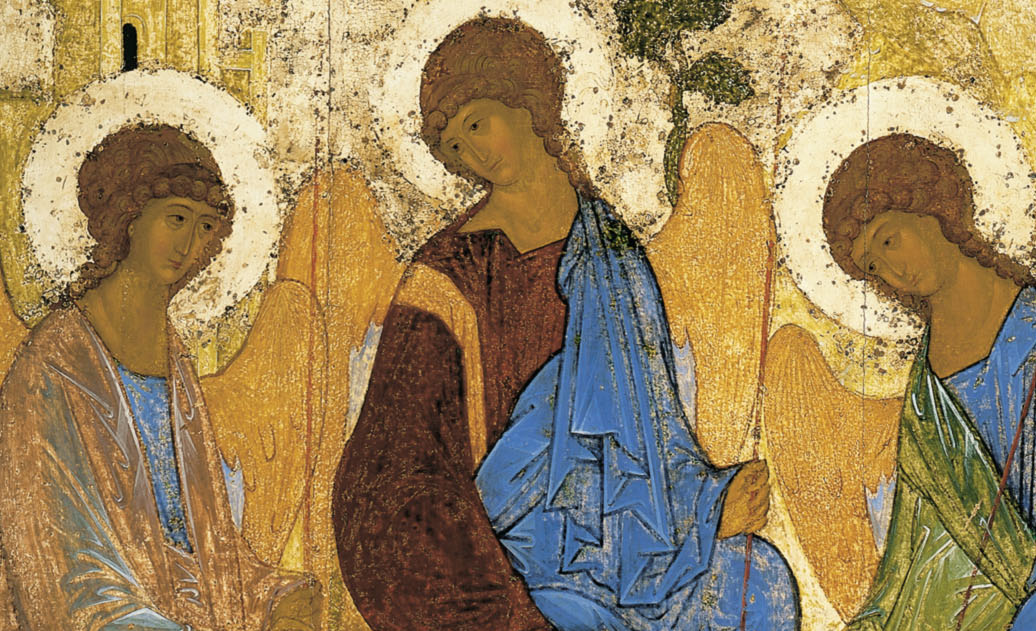
The world that produced these images was brutal and chaotic and largely forgotten. The images remain. Not because they fixed anything, but because someone made them anyway.
Whether making things matters isn’t something the film settles. But it suggests something. That the question might be wrong. That waiting for certainty is its own kind of silence. That the bell rings or it doesn’t, and you won’t know until you cast it.
Boriska didn’t know what he was doing. He did it anyway. And six hundred years later, Rublev’s icons still hang in museums, still glow with that impossible gold, made by a man who once went silent and then decided to speak again.
Maybe that’s enough. Maybe it has to be.